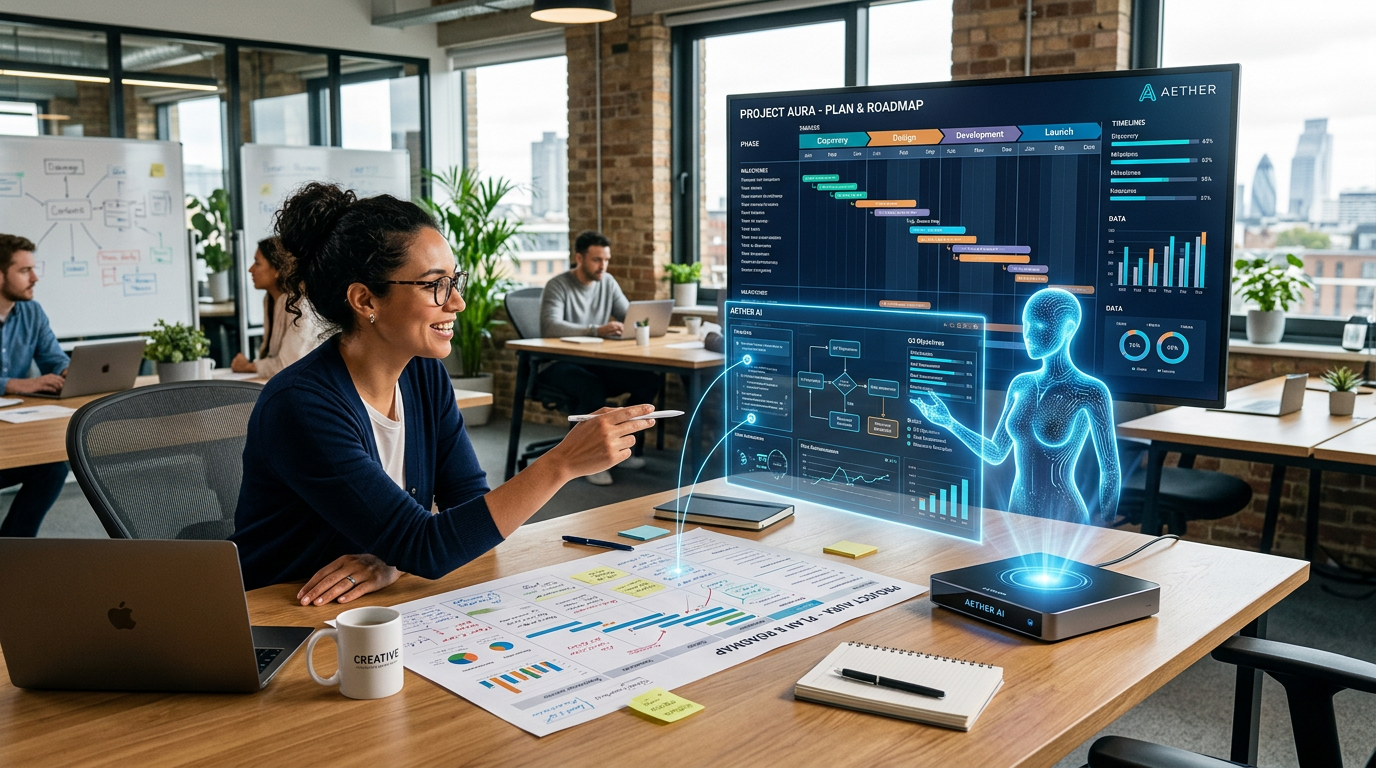
Everyone is asking what AI should do for project managers.
I think we’re asking the wrong question.
The real question isn’t whether AI can make decisions. It’s whether we still know which decisions belong to us.
Someone asked me this week:
“How do you decide what to hand off to AI versus what you keep for yourself?”
It’s a better question than it sounds because most project managers don’t actually have an answer. They either hand off too much because it’s fast, or hold onto everything because it feels safer. Neither is really a decision. It’s a habit.
Here’s how I think about it.
AI is excellent at anything that starts with information you already have. Give it a scope, a set of constraints, requirements, or a timeline, and it can turn that into a structured plan faster than I ever could alone.
I regularly use AI to draft work breakdown structures, risk registers, meeting summaries, communication plans, and the first version of project schedules.
Work that used to take me a week can now be completed in a day, after reviewing, refining, and validating AI’s output.
But that didn’t happen overnight.
Over time, I’ve taught AI how my team works, the level of detail I expect, and how I like to structure project documentation. I even toned down its overly polished language so the documents sound like they were written by our team, not by a machine.
To me, that’s where the real value comes from. AI isn’t just a tool you use. It’s a capability you develop.
That’s the important distinction. AI doesn’t replace my thinking, it accelerates it. The final decisions, the adjustments, and the accountability are still mine.
Where AI runs out of road is anything that depends on information nobody wrote down.
Will a stakeholder quietly resist a plan that looks too rigid?
Is the team already exhausted after two reorganizations and in need of stability more than efficiency?
Is the technically “best” solution actually the one that will succeed with the people involved?
That information lives in relationships, experience, trust, and organizational history. None of those fit neatly into a prompt.
That’s why I don’t see AI and humans as competing decision makers.
My approach is simple:
AI drafts. I decide.
The moment an AI recommendation looks polished and confident, it’s tempting to treat it as the answer instead of one input among several. That’s the real risk, not that AI gets it wrong, but that a well organized output quietly stops feeling like a draft.
The project managers I’ve seen get the most value from AI aren’t the ones who trust it completely, or the ones who barely touch it.
They’re the ones who know exactly which step they’re outsourcing, and never let it become the step where they stop thinking.
Before accepting an AI recommendation, I ask myself three simple questions:
- Does this decision depend only on data, or does it also depend on people and relationships?
- What important context does AI not know?
- If this decision goes wrong, who is accountable?
The future isn’t about replacing project managers with AI.
It’s about becoming the kind of project manager who knows exactly when to use it, and exactly when not to.
Because AI can generate the options. Accountability still belongs to us.
What about you?
Have you found the right balance between AI and your own judgment? Or are you still figuring out where one ends and the other begins?
I’d love to hear your perspective in the comments.
— Rosana Inacio | PM Insight
🌐 www.rosanainacio.com


Leave a Reply